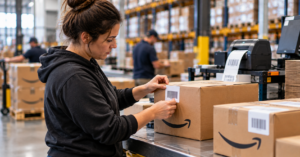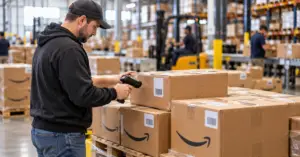

As holiday planning moves into the 2026 season, peak season costs are being shaped by a mix of transportation, inventory and warehouse pressures. For fulfillment teams, the challenge is not predicting a single number; it is understanding which forces are most likely to push spend higher and where operations can absorb some of that pressure. The most visible variables include tariffs, economic instability, election-year demand swings, fuel costs and warehouse capacity.
Peak Season Cost Drivers to Watch
Shipping demand rarely rises in a straight line, and that is why peak season costs can shift quickly once holiday volumes begin to build. As reported by Inc., “Amazon, the largest package-delivery company in the United States, has increased its peak-season fees compared with last year. The retailer announced this month that peak surcharges will apply during three high-demand periods in the 2026 holiday season: October 25 to November 21, November 22 to December 26, and December 27 to January 16. Amounts vary by period and by package type.”
That update is a practical signal for fulfillment operators because it pairs seasonal demand with pricing action from a major parcel player. It also reflects broader economic factors that matter in 2026, including persistent input-cost pressure, uneven consumer demand and tighter margin expectations across shipping networks.
For fulfillment and warehousing, the main cost drivers are likely to be the same ones that affect any constrained network. Tariffs can alter landed cost. Economic instability can slow purchasing decisions. Election-year demand swings can create uneven order timing. Fuel costs can increase transportation expense. And warehousing becomes more expensive when labor, storage and space need to flex at the same time.
The key for operators is to separate broad market noise from the costs that can be managed internally. Carriers respond to fuel and capacity conditions, but warehouse teams can still reduce rework, improve slotting and plan labor more carefully. In a season where peak season costs may be influenced by several overlapping pressures, better execution matters as much as market conditions.
Why Tariffs and Policy Uncertainty Raise Costs
Tariffs affect cost long before products move through the warehouse. When duty rates change or trade rules feel unstable, inbound product costs can rise and planning windows often get shorter. Procurement teams may accelerate purchases to avoid future increases, or they may delay buys while waiting for clarity. Either way, the result is operational friction.
That uncertainty also complicates inventory decisions. If a brand pulls inventory forward to hedge against policy changes, it may need more storage space and more handling. If it waits too long, it may miss the window to land inventory before holiday demand peaks. Both scenarios can lift peak season costs because the business is paying either for earlier storage or for faster replenishment.
For fulfillment teams, the takeaway is neutral and practical: tariff shifts change the economics of stock timing. Even when the final consumer price is not adjusted immediately, the cost to hold, move and process inventory can still climb. That is why tariff monitoring belongs in seasonal planning discussions alongside order forecasts and carrier commitments.
How Fuel Prices Affect Shipping Budgets
Fuel is one of the most visible inputs in transportation spending, and it remains a direct driver of peak season costs. The U.S. Energy Information Administration’s Gasoline and Diesel Fuel Update, released September 15, 2026, shows on-highway diesel prices at $6.285 per gallon nationally, up from the prior week. That kind of movement matters because carriers often respond with tighter pricing, surcharge pressure or reduced flexibility when diesel costs rise.
For shippers, higher fuel prices can ripple through linehaul, zone pricing and expedited shipping decisions. They can also change the math on mode selection. A shipment that might have been acceptable at a lower rate can become less attractive when the carrier has to protect margin against a volatile fuel environment. Those changes do not always appear as a single surcharge line; sometimes they show up as less favorable base pricing across the network.
In practical terms, fuel pressure tends to make peak seasons less forgiving. If demand also rises at the same time, transportation partners have fewer reasons to discount, and peak season costs become harder to offset with volume alone. That is why many fulfillment teams track fuel trends early and revisit routing assumptions before holiday volume reaches its highest point.
How Demand Volatility Changes Freight Rates
Unsteady demand often creates more rate pressure than steady demand, even when total volume is not unusually high. Consumer caution, changing buying patterns and macro uncertainty can all make planning less efficient. When order volume comes in uneven waves, carriers and warehouse teams have a harder time smoothing labor and trailer utilization.
Current retail data points in the same direction. The latest U.S. retail sales reporting tracked in FRED’s Advance Retail Sales series reflects August 2026 conditions and shows that retail activity remains a live indicator heading into the holidays. When consumer spending trends are uneven, fulfillment networks have to balance inventory against uncertainty rather than against a stable demand curve. That is exactly the kind of environment that can make peak season costs harder to control.
Freight rates often rise when volume becomes less predictable because carriers need to protect capacity and adjust for missed efficiency. For shippers, that means the same order may cost more simply because the network is more volatile. The effect is especially pronounced when retailers wait too long to finalize buys or when promotional timing causes last-minute surges.
Demand swings also affect warehousing. If inventory arrives in a rush, labor needs increase and receiving areas can become congested. If orders peak unpredictably, pick faces may not be replenished fast enough. In both cases, the cost to move freight rises because the operation is no longer flowing smoothly.
Why Warehousing Becomes a Bigger Cost Center
Transportation usually gets the most attention during the holidays, but warehousing can become the bigger cost center once inventory starts stacking up. Labor, storage density and space planning all become more expensive when a facility has to process more product in the same window. That is especially true if inbound receipts arrive faster than outbound velocity can clear them.
As transportation costs rise, the pressure naturally shifts inside the building. More inbound volume means more receiving labor, more putaway activity and more opportunity for congestion. If items are not slotted well, teams spend more time walking, searching and correcting mistakes. Those hidden costs quickly add up and can make peak season costs feel larger than the carrier invoices alone suggest.
Warehouse labor is also harder to manage during the holidays because staffing flexibility is limited. Teams may need temporary support, staggered shifts or overtime, all of which raise operational spend. Space is another issue. When inventory levels increase, the cost of storing slow-moving or promotional items often rises because every square foot has to work harder.
Plan Around Seasonal Pressure
Earlier forecasting is one of the most effective ways to reduce peak season costs. When forecasts are updated ahead of the holiday rush, teams can stage inventory, schedule labor and reserve warehouse space before demand accelerates. That planning step matters because the cost of reacting late is usually higher than the cost of preparing early.
Better inventory planning also helps. Staged labor support, tighter slotting and prebuilt replenishment plans can reduce bottlenecks before they spread across the operation. If a fulfillment team knows which SKUs will move fastest, it can position inventory closer to pick areas and limit unnecessary travel.
Operational readiness also includes partner transition planning. Teams onboarding new providers can reduce setup risk by aligning early on timelines, systems and workflow expectations, as outlined in partner onboarding steps. A smooth transition reduces the chance that peak season costs rise because of preventable setup delays.
Use Fulfillment Support to Control Costs
For many companies, the most practical way to control peak season costs is to reduce the amount of work that has to happen at the exact moment volume spikes. That is where seasonal prep, kitting and assembly support can help. Building an early prep plan around seasonal kitting services can move labor-intensive tasks ahead of peak demand and protect throughput when holiday orders accelerate.
Test whether the extra prep work pays off by measuring labor savings, handling reduction and shipping consistency against setup effort. A focused kitting ROI analysis helps teams quantify whether bundling lowers touches enough to offset added complexity. In a season where tariff exposure, fuel pressure and warehouse congestion all matter, reducing internal handling can create real savings even if the per-unit process looks more involved at first glance.
Businesses reassessing fulfillment capacity before holiday demand should also evaluate whether new 3PL support would improve resilience. A stronger partner can add capacity, stabilize workflows and help absorb seasonal volatility without forcing the brand to build extra infrastructure it will not need year-round. That can be especially valuable when peak season costs are rising across both transportation and warehousing.
In practice, the best results come from combining better forecasting with more disciplined execution. When kitting, inventory staging and fulfillment support are aligned before the holiday rush, teams can limit rework and keep the operation more predictable. That is often the difference between seasonal strain and manageable seasonal pressure.
Improve Peak Season Costs Control With Diamond Fulfillment Solutions
The biggest 2026 holiday cost drivers are likely to come from tariffs, economic instability, election-year demand swings, fuel costs and the growing burden on warehousing. None of those forces can be eliminated, but all of them can be planned around more effectively. The companies that prepare early will be in a better position to manage peak season costs without sacrificing service.
Warehousing deserves special attention because it is where many of these pressures converge. If inventory is staged well, labor is scheduled carefully and prep work is moved earlier in the cycle, the operation can absorb more volume without adding as much friction. Teams that want to strengthen that part of their operation can plan seasonal workflows with Diamond Fulfillment Solutions before demand tightens.