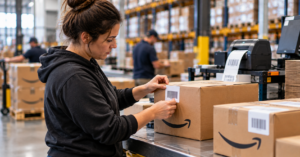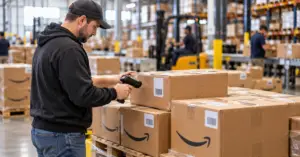

For CPG shippers, 3PL warehousing is often the difference between keeping pace with demand and getting buried by it. A third-party logistics provider / 3PL provider can manage storage, inventory, and shipping so brands can focus on production, channel strategy, and customer service.
At its simplest, 3PL warehousing outsources warehouse operations to a partner that handles receiving, storage, picking and packing / pick and pack operations, and outbound shipping, turning logistics into a managed service instead of a fixed internal burden.
In day-to-day execution, product moves through receiving, putaway, inventory management / inventory tracking, and then order fulfillment / fulfillment services. This sequence is where service levels and margin are won or lost.
As noted by Armstrong & Associates, U.S. 3PL net revenue rose 5.1% to $138 billion in 2025, reinforcing how quickly outsourced logistics adoption is scaling.
More brands now evaluate outsourced logistics / outsourcing fulfillment to improve throughput, reduce errors, and gain current order-status visibility. For teams comparing providers, applying clear warehouse partner selection criteria helps match operations to actual channel needs.
Scalability and Seasonal Flexibility
Seasonal spikes are where 3PL warehousing decisions get stress-tested. Promotions, retail resets, and holiday cycles can change daily volume quickly, and internal teams often cannot add space or labor fast enough.
A strong 3PL can absorb those swings by flexing labor, space, and process design around demand. That gives the brand breathing room during spikes without locking it into permanent overhead.
Peak readiness depends on four operating controls:
- forecast-informed inbound scheduling;
- slotting updates before volume surges;
- labor plans tied to order cut-off windows;
- carrier alignment for outbound capacity.
That shift from reactive execution to planned execution is what makes 3PL warehousing valuable beyond storage alone. For broader market context, many shippers are also tracking tariff pressure and network shifts in updates as part of regular 3PL warehouse market analysis.
3PL Warehousing Vs. In-House Fulfillment
The most common comparison for 3PL warehousing is in-house fulfillment. In-house can offer direct control over labor, space, and process design, which appeals to some consumer goods companies with stable volumes and specialized handling needs.
But that control comes with overhead cost reduction challenges. Facilities, staffing, training, systems, and transportation management all sit on the brand’s balance sheet. As demand changes, those fixed costs can be hard to adjust.
A 3PL shifts many of those burdens to a partner with established fulfillment center network capacity and operating playbooks. That can improve inventory cost reduction, especially when seasonal swings make internal planning harder. The right structure depends on SKU complexity, order volume, service expectations, and whether the brand needs local or national reach.
The ROI of working with the right 3PL is often tied to labor efficiency, space utilization, and better use of capital.
How WMS Supports 3PL Operations
A modern warehouse management system / WMS software is the backbone of effective 3PL warehousing. It coordinates receiving, bin location, order release, and shipment verification so teams can keep inventory moving without losing accuracy.
That software layer is especially important in multi-client environments, where supply chain management / supply chain operations depend on clean data and predictable workflows. If a WMS is weak, even a strong warehouse team can struggle with missed orders, poor slotting, or inaccurate counts.
WMS integration also supports ecommerce fulfillment / omnichannel distribution by syncing orders, inventory, and shipping updates across systems. For CPG brands, current inventory and order-status visibility helps prevent stockouts, protect service levels, and reduce manual intervention.
When WMS and carrier logic work together, distribution services / distribution center operations become easier to scale and easier to audit, which is critical in regulated or fast-moving categories.
Value-Added Services That Matter
The best 3PL warehousing providers do more than store product. They add services that help brands move faster and present better at the point of sale. Common examples include value-added services / kitting and assembly, labeling, packaging support, and reverse logistics / returns management.
For CPG brands, these services can reduce touchpoints and simplify launch activity. A provider that can handle bundle creation, special packs, or retail prep can shorten timelines and reduce internal workload.
Transportation support matters too. Strong transportation management / carrier selection can improve service consistency while reducing avoidable freight issues. In some cases, service design may also involve bonded warehouse solutions, hazmat storage compliance, or even questions around freight forwarding vs 3PL depending on the product and market strategy.
When comparing providers, CPG brands should also look at whether the partner can support contract warehousing options that align with the product mix, order profile, and growth plans.
How 3PL Warehousing Costs Are Built
Pricing in 3PL warehousing usually has three core pieces: storage, handling, and fulfillment. Storage may be tied to pallet storage pricing, bin locations, or cube usage. Handling often reflects inbound receiving, putaway, and outbound touches.
Fulfillment fees usually cover the work involved in picking, packing, and shipping. Those charges can rise or fall based on order complexity, special packaging, or volume tiers. The most efficient programs are built around storage density and handling efficiency, not just the lowest quoted rate.
Brands should ask how a provider drives cost savings through labor planning, inventory layout, and route optimization technology. One practical metric to track is dock-to-stock time, alongside pick accuracy and cost per order, to make performance comparisons operationally specific.
Distribution Center or Fulfillment Center: What CPG Brands Need to Know
In everyday conversation, 3PL warehousing can describe both a distribution center and a fulfillment center, but the terms are not always identical. A distribution center often focuses on moving larger quantities efficiently through the network. A fulfillment center usually emphasizes order-level processing and direct shipment to customers or stores.
For CPG brands, the difference matters because channel mix shapes the operating model. Retail replenishment, ecommerce, and omnichannel distribution may require different workflows even if they happen inside the same facility.
The best partner will match facility design to demand pattern, not force the brand into a one-size-fits-all structure. In many cases, the right answer is a hybrid model that combines distribution services and fulfillment services under one roof.
Improve Your 3PL Warehousing Strategy With Diamond Fulfillment Solutions
For CPG shippers, the right 3PL warehousing partner should improve visibility, lower friction, and create room for growth. That means evaluating technology, service breadth, operating discipline, and the ability to adapt as volume changes.
It also means looking beyond basic storage. Strong inventory tracking, practical pick and pack operations, and support for special handling can materially affect performance. Connect with Diamond Fulfillment Solutions to discuss a 3PL warehousing approach that fits your CPG operation.