
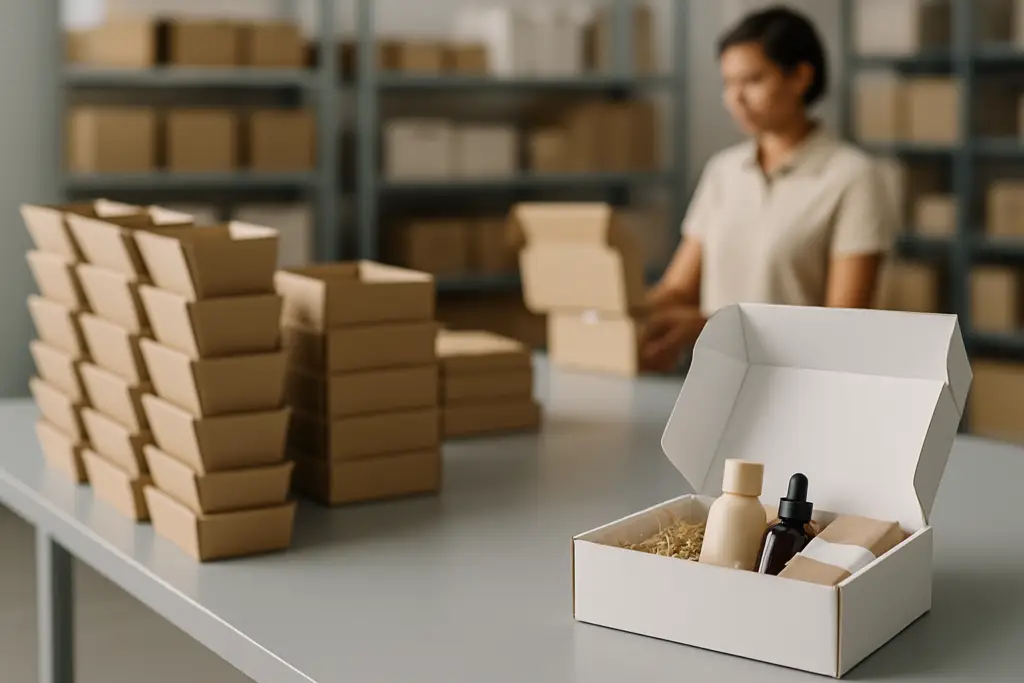
Subscription box kitting has become an operations problem as much as a packaging one, and that is exactly why the right process matters. For shippers and BCOs, the challenge is not simply getting boxes out the door; it is keeping subscription box kitting accurate, flexible, and repeatable as monthly volume grows. Teams evaluating service models often start by clarifying workflow fit across kitting, bundling, and assembly so production standards are defined before volume increases.
Subscription box kitting also sits at the intersection of customer expectations and warehouse execution. When teams manage recurring shipments, the work has to support quality control, customization, and scale without introducing avoidable error or delay.
What Is Subscription Box Kitting and How Does It Work
Subscription box kitting is the repeatable assembly of multiple items into a single package for recurring shipment. In practical terms, it is a structured form of subscription box assembly that turns a set of components into a ready-to-ship kit. That is different from simple pick and pack labor, where each order is built one line item at a time.
The workflow depends on clear bill of materials planning, accurate SKU management, and controlled inventory staging. If those inputs are loose, the downstream result is usually missed components, inconsistent packouts, and slower cycle times. For teams evaluating kitting and fulfillment, the first question is usually whether the operation can support recurring standards instead of one-off improvisation.
As a process discipline, subscription box kitting works best when every box type has a defined build path, a consistent component list, and a documented assembly method. That structure creates the foundation for scalable monthly output.
How to Reduce Kitting Errors at Scale For Subscription Boxes
Accuracy starts before the box is sealed. Strong quality control depends on checkpoints at staging, assembly, and final packout, not just a single inspection at the end. With barcode scanning and barcode verification, teams can confirm the right item is being pulled into the right kit before the error reaches the customer.
Subscription box kitting programs also benefit from disciplined inventory management and tighter WMS visibility. When the warehouse management system reflects current counts and status, planners can reduce shortages, rebalance labor and avoid last-minute substitutions. That matters even more when subscription fulfillment windows are fixed and shipping commitments are narrow.
According to IMARC Group’s subscription box market forecast in 2025, the market reached USD 37.5 billion in 2025 and is projected to reach USD 116.2 billion by 2034. For 2026 and 2027 planning cycles, that trajectory signals sustained growth pressure on fulfillment operations, especially where recurring kit accuracy and cycle-time consistency drive customer retention.
To reduce errors consistently, operations teams can apply a simple step sequence:
- Standardize each kit with a locked bill of materials and validated SKU assignment.
- Stage components by batch with visual controls and scan-required handoffs.
- Run in-process checks at pick, build, and final packout instead of end-only audits.
- Track exceptions by error type weekly and adjust work instructions before the next release.
Another practical control point is ship window planning. When batch releases are scheduled cleanly, the team can work more evenly and reduce avoidable pressure at the tail end of the cycle.
How to Choose a 3PL Partner For Subscription Box Kitting
Selecting a 3PL kitting partner is not just a rate decision. It is a fit decision around process maturity, reporting, and operational discipline. If a provider offers a broad kitting fulfillment service but cannot show how it manages component traceability, labor planning, and exception handling, the apparent convenience can disappear quickly.
Teams exploring fulfillment center outsourcing should ask how the provider supports warehouse management system access, how reporting is structured, how changes are communicated when inventory or production plans shift and knowing what to expect when searching for a new warehouse partner.
A practical selection checklist helps keep this decision objective:
- Confirm process controls: scan compliance, documented SOPs, and quality checkpoints.
- Validate systems fit: data visibility, reporting cadence, and integration readiness.
- Test change management: how quickly packaging, inserts, and SKU rules can be updated.
- Review peak-readiness: labor plans, staging capacity, and carrier coordination during monthly surges.
- Request recent examples of similar subscription programs and exception-resolution timelines.
In this context, subscription box kitting is only as strong as the partner’s ability to keep exceptions from becoming the norm.
Subscription Box Kitting Vs. Standard Ecommerce Fulfillment
Subscription box kitting is not the same as standard ecommerce fulfillment, even though both rely on receiving, picking, packing, and shipping. Standard order fulfillment is often optimized for variable baskets and quick turn handling. Subscription operations, by contrast, need repeatable routines that support identical or semi-identical builds over and over again.
That difference affects labor planning, packaging flow, and material staging. Branded packaging and custom packaging design can add assembly steps that do not exist in a typical pick-and-pack lane. If the packout is not mapped carefully, the box may look polished from the outside while hiding costly inefficiencies inside the process.
It is also why subscription box fulfillment deserves its own operating plan. The workflow has to account for timing, consistency, and the customer promise behind each recurring shipment. For organizations looking to compare approaches, which helps clarify where each service model fits.
When teams treat subscription box kitting like ordinary ecommerce order flow, the process usually becomes harder to control instead of easier.
How Batch Kitting and Customized Kitting Differ For Subscription Brands
Batch kitting and customized kitting solve different operational problems. Batch kitting is usually the better approach when a large number of boxes share a common build and can be assembled in a controlled run. It improves throughput and helps teams plan labor around a fixed schedule.
Customized kitting, on the other hand, is useful when subscriber profiles, tier levels, or seasonal programs require different contents. In that case, subscriber tier segmentation drives the box logic, and the warehouse needs a clean method for handling different packouts without losing control of the line.
That is also where product sourcing reliability becomes operationally important. If inserts arrive late or components vary in quality, the entire build plan can slip. The same is true for custom insert production and seasonal packaging variation, both of which add complexity that must be planned into the schedule rather than handled ad hoc.
For many teams, the right answer is a hybrid model: batch where consistency matters most, customize where the customer promise requires it, and keep the rules visible everywhere. That is the most stable path for subscription box kitting at scale.
Subscription Box Kitting For High-Volume Monthly Fulfillment
High-volume monthly programs expose weak planning quickly. Batch ship date requirements create a hard deadline, and that deadline has to be backed by staffing, material availability, and production sequencing. A missed window can affect carrier performance, customer satisfaction, and downstream support volume.
At this stage, subscription box kitting becomes a question of rhythm. The operation needs enough labor flexibility to absorb peaks, but also enough standardization to avoid chaos. That is where strong shipping carrier coordination and detailed labor balancing become part of the same conversation as the box build itself.
It helps to think of monthly volume in terms of flow, not just count. Inventory management has to support the next release, not only the current one. If the team cannot see what is staged, what is committed, and what is still inbound, the program will eventually hit a wall.
That is why scale planning for subscription box kitting should be reviewed as a recurring operating cycle, not as a one-time launch exercise.
How to Improve the Unboxing Experience Through Better Kitting Processes
The unboxing experience is often treated as a marketing detail, but it is also an operational outcome. A clean unboxing presentation depends on consistent component placement, orderly packing, and visual standards that hold from one batch to the next. If the box opens sloppily, the customer notices immediately.
Well-run subscription box kitting supports this result through disciplined pack order, cleaner inserts, and careful handling of branded packaging. Those elements can strengthen brand loyalty mechanics without requiring extra complexity if the process is designed properly. The key is to preserve presentation while keeping the line efficient. For brands that are also managing returns and exceptions, it is worth considering how returns and reverse logistics affect the broader workflow. If damaged items, substitutions, or rework requests are common, the operation needs clear recovery procedures that do not disrupt the monthly build.
In the end, the best subscription box kitting programs protect the subscriber experience by making the inside of the box as reliable as the promise on the outside.Teams need an all-in-one 3PL provider approach for ecommerce kitting.
Build a Stronger Subscription Box Kitting Operation With Diamond Fulfillment Solutions
Reliable subscription box kitting depends on a simple but demanding equation: control the inputs, standardize the build, and scale the workflow without losing accuracy. That means strong quality control, disciplined WMS visibility, accurate barcode verification, and an operating model that can support both volume and variation.
For subscription brands, the practical test is whether the process can handle recurring demand without creating friction for the team or inconsistency for the customer. When a provider understands kitting fulfillment service requirements, maintains clean inventory staging, and supports flexible subscription fulfillment, the result is a more stable monthly operation and a better customer outcome.
Connect with Diamond Fulfillment Solutions to discuss a subscription box kitting workflow built for control, customization, and scale.