
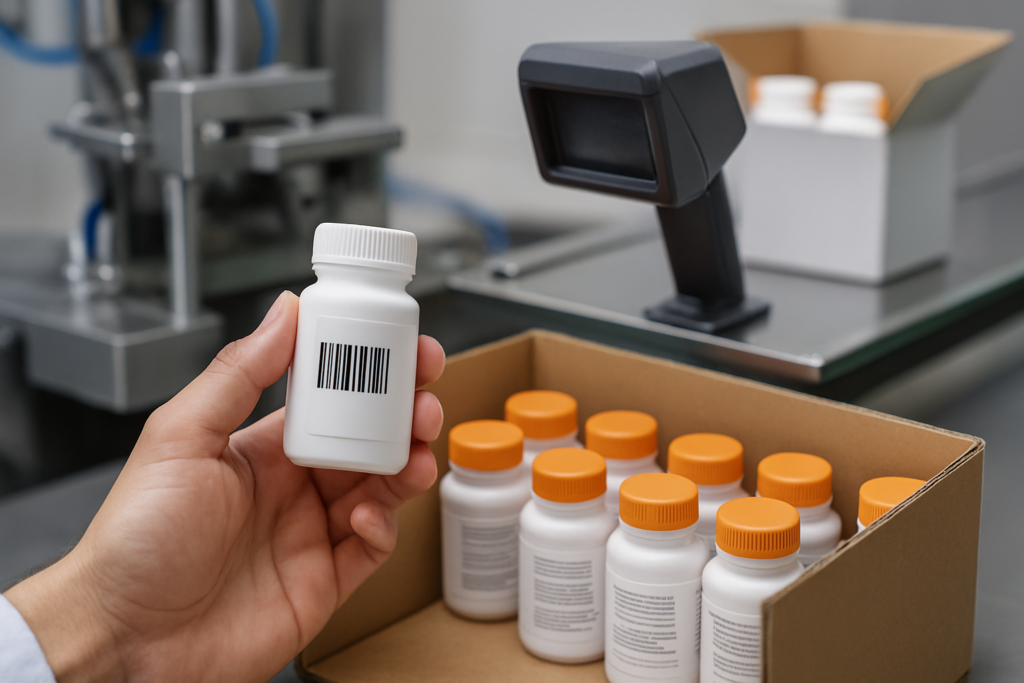
Healthcare teams assessing serialized operations often start by reviewing practical selection criteria for healthcare fulfillment providers so traceability expectations are clearly defined before implementation begins.
Why Healthcare Serialization Now Drives Execution
For pharmaceutical and medical device teams, healthcare serialization is now a core operating requirement. When fulfillment processes are built around traceability, each handoff is easier to verify, each exception is easier to isolate, and each shipment is easier to defend during an audit or recall.
That is why healthcare serialization matters across the full fulfillment path, from inbound receiving through final shipment confirmation. It helps teams strengthen compliance, improve supply chain visibility, and respond more quickly when product issues arise. For organizations that handle regulated healthcare products, the operational goal is simple: know what moved, when it moved, and exactly where it went.
These priorities become even more important when fulfillment operations must support both patient safety and regulatory readiness. A serialized process creates a cleaner chain of custody, reduces manual guesswork, and gives teams the documentation needed to handle disputes, recalls, and partner reviews with less friction.
What Healthcare Serialization Means
At its simplest, healthcare serialization assigns a unique identifier to an individual package or saleable unit so it can be tracked through the supply chain. In practice, that identifier works alongside aggregation data, scan events, and package level records to create a reliable traceability framework.
That framework is more reliable than standard fulfillment because it does not rely only on lot level movement. Instead, it connects each package to its parent carton, pallet, or shipment, which supports faster verification and more precise investigations. When products are scanned at receiving, storage, pick, pack, and ship, the warehouse record becomes a continuously updated history of movement rather than a static inventory snapshot.
When serialized handling is paired with disciplined quality checks, the result is fewer documentation gaps and lower downstream risk.
Use the FDA Timeline as the Compliance Anchor
The original DSCSA milestone of November 27, 2024 established the transition into enhanced interoperable electronic exchange, but for 2026 and 2027 the practical issue is sustained execution readiness rather than one time deadline preparation. According to the FDA’s DSCSA requirements and timelines page, trading partners are expected to exchange transaction information and transaction statements in secure, interoperable electronic form under enhanced drug distribution security requirements. That expectation keeps serialization squarely in day to day operational control, audit response, and partner alignment.
For fulfillment teams, the practical takeaway is that documentation, interoperability, and trading partner alignment must already be embedded into daily workflows. Systems need to support electronic exchange, and staff need clear procedures for exceptions, confirmations, and escalation paths. Without those pieces, even a well run warehouse can struggle to prove compliance when a customer, regulator, or supply chain partner requests evidence.
This is also where operational readiness and partnership readiness overlap. A company that can support a pharmaceutical fulfillment partnership with strong process controls is better positioned to keep trace data accurate, auditable, and usable as expectations continue to tighten.
How to Operationalize Serialized Control Across Fulfillment
To make serialized control practical across day to day execution, teams need a structured approach that connects floor level actions to compliance outcomes. The three focus areas below help establish consistent performance across receiving, handling, documentation, and response workflows.
1) Control Serialized Workflows Across Pharma and Device Fulfillment
Healthcare serialization becomes most valuable when the warehouse floor is busy and exceptions are unavoidable. Receiving teams need to verify incoming product against expected identifiers, storage teams need to maintain visibility as inventory moves, and pick and pack teams need to confirm the right serialized units leave the right locations at the right time.
That workflow helps address damaged, mismatched, or unscannable items before they create broader disruption. If a serial is missing or a label does not scan cleanly, the issue should trigger a clear hold process rather than a rushed workaround. In regulated healthcare distribution, exception management is not a side process; it is part of compliance.
Serialized control also helps reduce counterfeit and diversion risk. When the system can validate product identity at multiple points, it becomes harder for undocumented inventory to enter the stream unnoticed. That is particularly important for devices and kits, where packaging quality and traceability are tightly linked to safe use. Many operations teams therefore review medical device packaging practices to ensure labeling, sealing, and serialization remain aligned.
2) Build Strong Compliance Operations
Compliance is easier to sustain when technology and process support each other. A warehouse management system should capture scan events, maintain trace records, and connect order data to lot and serial information without requiring extra manual handling. In a mature serialized environment, the record reflects the product journey automatically as teams move through each task.
Barcode and label quality control is just as important. Poor print quality creates avoidable failure points, especially when teams rely on high volume scanning. Effective controls include printer validation, label inspection, and recurring spot checks that prevent drift over time.
Data governance also plays a central role. Records should be retained according to policy, protected from unauthorized edits, and structured so audits can be completed without rebuilding a transaction history from scratch. That discipline supports both operational transparency and regulatory confidence. It is one reason organizations reviewing packaging workflows often compare partner capabilities against medical kitting provider guidance before making long term fulfillment decisions.
3) Improve Recall Response and Visibility
When a recall or quality hold occurs, healthcare serialization can dramatically reduce time spent searching for affected inventory. Instead of investigating broad batches manually, teams can use serial level and lot level records to narrow scope quickly and accurately.
That speed supports patient safety by shortening the window between issue detection and action. It also reduces the operational burden on teams balancing investigations with normal fulfillment activity. Better visibility means fewer manual checks, cleaner tracebacks, and a more controlled response when partners need proof of where a unit went.
In practical terms, this is where serialization pays off beyond compliance alone. It helps teams make faster decisions, limit unnecessary holds, and communicate with more confidence when product integrity is in question. For regulated healthcare distribution, that combination of speed and clarity is a measurable operational advantage.
4) Align the Process With Diamond Fulfillment Solutions
Companies selecting a fulfillment partner should evaluate whether the operation can support healthcare specific handling with the rigor required to maintain traceability. Serialization does not operate in isolation; it depends on storage discipline, packaging accuracy, and reliable process control from receiving through shipment.
That is why teams often review healthcare standards alongside service specific capabilities such as pharmaceutical order handling, device packaging controls, and kitting execution. A provider that understands how these elements intersect is better equipped to support serialized workflows without introducing unnecessary handoffs or documentation gaps.
Improve Your Healthcare Serialization With Diamond Fulfillment Solutions
If your team is working to strengthen traceability, improve recall readiness, or tighten compliance operations, the right fulfillment partner can make a meaningful difference. Diamond Fulfillment Solutions supports healthcare, pharmaceutical, and medical device organizations with process driven execution designed for regulated distribution environments.
From packaging and kitting to documentation and warehouse workflows, the goal is consistent: build serialized operations that stand up to operational pressure and regulatory review. If you are ready to align your fulfillment model with stronger track and trace controls, connect with Diamond Fulfillment Solutions to discuss next steps.