
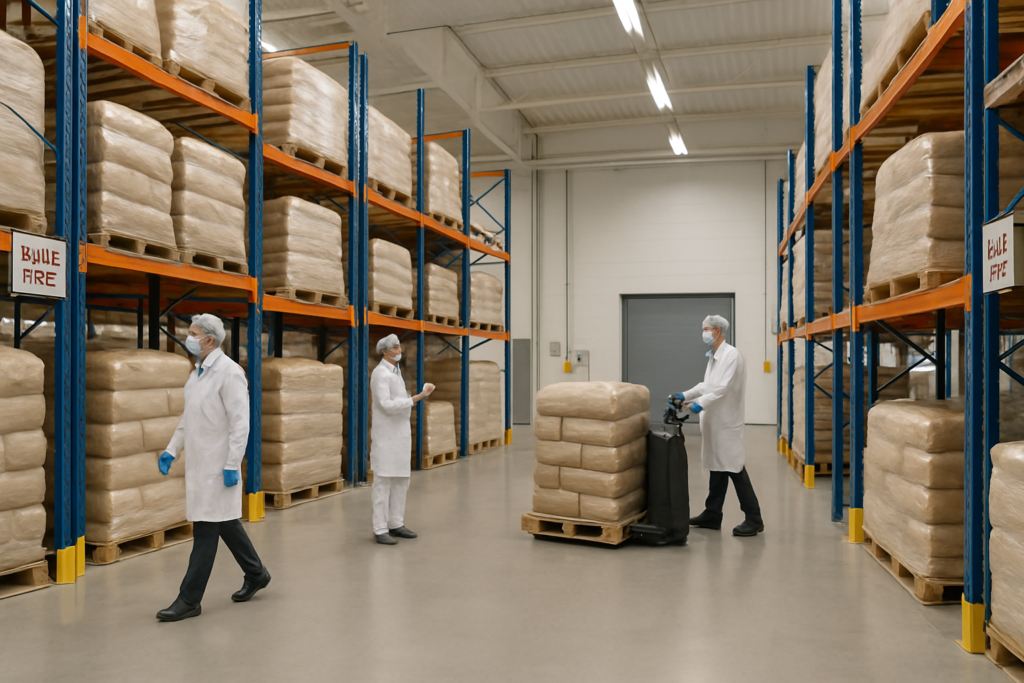
Food grade warehousing is a storage and handling environment built to support packaged food safety, product integrity, and the operational discipline CPG brands need to stay audit-ready. It is not simply a cleaner warehouse. It is a controlled system that aligns physical conditions, documentation, and handling practices with the expectations of regulators, retailers, and downstream customers.
For shippers and BCOs, the practical value is straightforward: the right facility reduces the chance of spoilage, contamination, mispicks, and compliance gaps while preserving shelf life. That matters whether the product is shelf-stable, temperature-sensitive, or moving through a multi-channel distribution network that demands consistent visibility.
One reason this topic has become more urgent is the cost environment around CPG operations. According to McKinsey, profitability pressure and operating-cost volatility remain top concerns for grocery and CPG operators. In that environment, food grade warehousing is part of margin protection, not just a compliance checkbox.
There is also a basic regulatory layer. As reported by U.S. Food and Drug Administration, “The final rule establishes requirements for shippers, loaders, carriers by motor or rail vehicle, and receivers involved in transporting human and animal food to use sanitary transportation practices to ensure the safety of the food.” That standard shapes how a food grade warehousing operation should be evaluated from dock to dispatch.
What food grade warehousing covers
A capable food grade warehousing environment typically includes food safety compliance, FDA registration where applicable, documented HACCP certification or a working HACCP plan, and operating discipline built around GMP compliance standards. Those elements matter because they turn general storage into a controlled process that can be audited and repeated.
Sanitation and facility hygiene are central. Strong sanitation protocols, cleaning schedules, and hygiene protocol enforcement reduce the risk of contamination and support consistent performance during inspections. A credible pest control program is equally important, because the facility must prevent threats before they affect product or documentation.
For many shelf-stable CPG products, ambient storage or dry storage is sufficient, but that does not mean temperature can be ignored. Good temperature control and temperature monitoring help maintain product quality, especially when products are exposed to seasonal swings, dock traffic, or extended dwell time.
At the design level, the warehouse should show clear warehouse facility design logic: segregated zones, defined traffic flow, access restrictions, and documented handling procedures. A true food grade storage facility does not depend on assumptions; it relies on repeatable controls and visible evidence.
Why compliance readiness matters
Compliance readiness is not just about avoiding a violation. It directly affects operating efficiency, recall exposure, customer confidence, and the ability to scale without creating hidden risk. In practice, a compliance-ready food grade warehousing operation supports tighter inventory management, more reliable food product traceability, and stronger response capability when a customer or regulator asks for proof.
That is especially important when the commercial environment is volatile. McKinsey’s 2025 view of grocery retail pressure underscores why operators need tighter controls and more disciplined execution. When margin pressure rises, waste, rework, and service failures become harder to absorb. A warehouse with strong regulatory compliance discipline helps defend against those losses.
This is where lot tracking, expiration date tracking, and inspection record keeping stop being administrative tasks and become business protections. If a product issue emerges, the operation that can isolate affected units quickly has a major advantage over one that relies on incomplete logs or fragmented spreadsheets.
Brands that work in this environment often benefit from a broader fulfillment partner perspective as well, including consumer packaged goods fulfillment services.
How to evaluate a warehouse facility
When evaluating food grade warehousing, start with the basics: confirm the facility understands food grade warehouse requirements, can show access control security, and maintains consistent inspection record keeping. If the team cannot explain how it documents issues, exceptions, and corrective actions, the operation is probably not ready for serious food-related work.
Ask for proof of audit readiness. That includes policies, sanitation logs, training records, and examples of regulatory compliance documentation. A facility that treats evidence as a core operating asset tends to be more dependable than one that assembles paperwork only when an audit is scheduled.
It also helps to look closely at the flow of goods. Are inbound and outbound paths clearly separated? Is there a process for damaged cartons, returned product, or quarantined items? Can the team explain how hygiene protocol enforcement is maintained during busy periods? These details reveal how the warehouse behaves under pressure.
Operationally, a strong provider should be able to discuss supply chain visibility, escalation paths, and how it manages exceptions. If the facility cannot describe how it prevents delays from turning into inventory errors, the risk shifts back to the brand.
Food grade warehousing vs. standard 3PL storage
Standard 3PL storage can move boxes. Food grade warehousing must do more. The difference shows up in cross-contamination prevention, allergen segregation, sanitation protocols, and the level of proof the operation can provide when something goes wrong.
A general warehouse might have enough space and labor to handle commodity inventory, but that does not mean it has the procedures for food-adjacent handling. If a provider lacks structured cleaning schedules, controlled staging areas, or documented allergen management protocols, it may be a poor fit for CPG brands with higher safety expectations.
This is also where specialized fulfillment support matters. A provider that understands Amazon FBA and shipping cost control can bring a more disciplined view of inventory flow, though food products demand additional safeguards beyond standard e-commerce preparation. For CPG shippers, that level of operational clarity is often the difference between stable service and recurring exceptions.
In short, the gap between standard 3PL storage and food grade warehousing is the gap between generic logistics and controlled product stewardship.
FDA registration, HACCP, and GMP standards
Many brands assume a warehouse is compliant because it says so on a website. That is not enough. A serious food grade warehousing partner should be able to explain FDA registration status where applicable, the role of a PCQI qualified individual, and how HACCP certification or a formal HACCP plan informs daily operations.
GMP compliance standards matter because they shape the behavior behind the scenes: training, handling, equipment cleanliness, documentation, and corrective action. A warehouse can look organized and still fail GMP expectations if the work is not documented or repeatable.
This section is also where the brand should ask about roles and accountability. Who verifies procedures? Who signs off on changes? How are deviations handled? These questions matter because the strength of food grade warehousing depends on both infrastructure and oversight.
The right partner will not oversell compliance. Instead, it will explain how the process actually works and where the limits are. That kind of clarity is a positive sign.
Pest control, sanitation, and audit proof
Food grade warehousing should operate with a documented pest control program, routine sanitation, and a visible commitment to audit proof. If the warehouse cannot show how it monitors entrances, storage zones, and loading areas, it is leaving a preventable risk exposed.
Third-party oversight matters here. A provider that prepares for third-party audit events and maintains SQF certification or a comparable food safety standard is usually demonstrating that compliance is part of the operating model rather than a one-time project. Even when certification is not the only goal, the discipline behind it often improves process consistency.
Keep an eye on the evidence trail. Inspection record keeping should be easy to retrieve, easy to understand, and consistent over time. A warehouse that struggles to produce records quickly may also struggle to respond under pressure.
This is an area where a broader service partner can help brands stay organized. Each provider’s onboarding approach for fulfillment partnerships is a useful reminder that process discipline is built early, not after problems appear.
Temperature control, lot tracking, and FIFO
Product quality in food grade warehousing often comes down to operational basics done well. Temperature control, temperature monitoring, and appropriate ambient storage practices protect shelf-stable CPG items from unnecessary quality drift. Even when refrigeration is not required, the environment still matters.
Traceability is the other half of the equation. Strong lot number tracking, food product traceability, and recall management systems make it possible to identify affected inventory quickly and contain issues before they spread. Brands should ask how data is captured, where it is stored, and how fast it can be retrieved.
FIFO inventory rotation and disciplined inventory management help prevent aged product from lingering in the system. When paired with expiration date tracking, FIFO becomes a shelf-life safeguard and a customer-service safeguard at the same time.
In a competitive market, these controls also support supply chain efficiency. Less waste, fewer exceptions, and cleaner visibility all strengthen the operation.
Allergen segregation and cross-contamination prevention
Food grade warehousing must treat allergens as an operational reality, not an afterthought. Effective allergen management protocols start with clear zoning, careful handling, and procedures that reduce the chance of transfer between products or packaging streams.
Cross-contamination prevention depends on disciplined receiving, storage, picking, staging, and cleanup practices. A warehouse should be able to explain where allergen-sensitive items are stored, how they are identified, and what happens when product families move through the same building.
This is another place where training and accountability matter. The team should know the procedures, follow them consistently, and understand the consequences of shortcuts. In practice, food grade warehousing is a daily discipline, not a policy document sitting in a binder.
When brands evaluate partners, they should compare these controls against the rest of the network. If the warehouse cannot confidently manage segregation, it is probably not the right fit for a regulated CPG program.
Choosing the right food grade warehousing partner
The best partner will combine food grade storage facility capability with transparent data, strong compliance documentation, and practical communication. That means more than clean aisles and a polished tour. It means a working system that supports supply chain visibility, quick escalation, and reliable response when volumes shift or an exception occurs.
Brands should also look for a provider that can connect food storage to broader fulfillment capability. When assessing fit, ask how the provider supports reports, how it handles deviations, and how it balances speed with control. The goal is not just to find a warehouse that says it can handle food products. The goal is to find one that can prove it repeatedly.
For CPG shippers and BCOs, that distinction matters. A well-run food grade warehousing partner protects product integrity, supports margin control, and strengthens readiness across the supply chain. If your team is evaluating a new location or reviewing current controls, connect with Diamond Fulfillment Solutions to discuss a food-grade approach built around compliance, traceability, and operational discipline.